The big lie
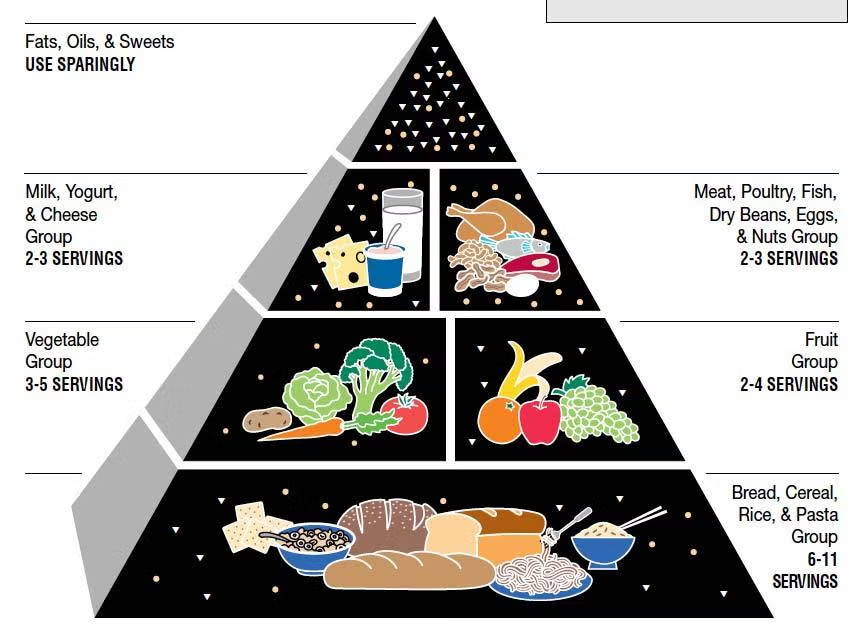
This is the USDA Food Guide Pyramid (1992 version) — the one drilled into kids in schools for decades through posters, textbooks, health class lessons, and even lunchroom materials. It told generations: eat 6–11 servings of bread, cereal, rice, and pasta every day (the huge base), then vegetables (3–5), fruits (2–4), dairy (2–3), meat/beans/eggs (2–3), and use fats/oils/sweets “sparingly” at the tiny tip. The message was crystal clear: carbs are the foundation of health, fat is scary, and more grains = better. It looked official, scientific, and simple. But it was built on flawed science, heavy industry pressure, and political convenience — and the results were disastrous for public health. It caused obesity and diabetes and other diseases.
The Toxic History: How Politics and Industry Built It The pyramid wasn’t born from pure evidence. It grew out of the 1977–1980 U.S. Dietary Goals and 1980 guidelines, heavily shaped by Ancel Keys’ selective “lipid hypothesis” (the idea that all saturated fat causes heart disease). Keys cherry-picked data from just 6 of 22 countries in his famous graph and buried contradictory results from large trials like the Minnesota Coronary Survey (which showed replacing saturated fat with seed oils increased death risk — results hidden for 16 years). Meanwhile, the USDA had a massive grain surplus from Nixon-era farm policies. Bureaucrats literally inflated the grain recommendation from the original nutritionists’ 3–4 servings up to 6–11 to “deal with their problem of the grain surplus.” Meat and dairy lobbies protested the initial draft because they didn’t like how their products (beef, milk, cheese, etc.) were shown — it made meat and dairy look bad or unhealthy. This delayed the launch by one year and cost taxpayers about $900,000, but the final version still pushed grains hardest. As one USDA insider later admitted, the agency’s dual role — promoting American agriculture and giving nutrition advice — created an “inherent conflict of interest.” The result? A government graphic that prioritized farm economics over human biology and risked the health of its citizens.
The Scientific Lies That Made It Dangerous Here’s where it gets actively misleading — and harmful:
-
“Carbs are good, fat is bad” was never proven. The pyramid told everyone to get at least half their calories from carbohydrates (mostly refined grains) and keep fat under 30%. But large studies (Nurses’ Health Study, Health Professionals Follow-Up Study) showed:
- Refined carbs and starches spike blood sugar/insulin → hunger, weight gain, triglycerides up, HDL down.
- Healthy fats (olive oil, nuts, avocados) protect the heart.
- Replacing saturated fat with carbs actually worsened cholesterol ratios for many people.
Walter Willett (Harvard School of Public Health) called the USDA pyramid “grossly flawed” in a 2003 Scientific American article. It lumped all fats together (ignoring that trans fats are deadly while olive oil is lifesaving) and treated potatoes like broccoli.
-
No distinction between whole and refined grains. White bread, sugary cereal, and pasta got the same “base of the pyramid” status as brown rice. This fueled the explosion of low-fat processed foods loaded with sugar — exactly what drove the obesity and diabetes crisis.
-
Dairy pushed as essential. 2–3 servings daily for calcium… even though big studies found no fracture protection and possible links to prostate/ovarian cancer risks at high intakes.
-
Red meat grouped with fish and beans. The pyramid restricted the best sources of high-quality protein and healthy fats to just 2–3 servings per day.
The Carb Addiction Trap: How the Pyramid Hooked Generations By recommending 6–11 daily servings of grains — mostly refined carbohydrates like white bread, pasta, sugary cereal, and rice — the pyramid created a perfect storm for carb addiction. These foods cause rapid spikes in blood sugar and insulin, followed by sharp crashes that trigger intense hunger and cravings for more carbs. This vicious cycle lights up the brain’s reward centers the same way addictive substances do.
Meanwhile, the “low-fat” rule led food companies to replace natural fats with hidden sugars, making products hyper-palatable and impossible to stop eating. Millions ended up unknowingly hooked on carbs, constantly hungry and overeating — turning the official “healthy” advice into a recipe for lifelong dependence.
The timing was catastrophic. The pyramid launched in 1992. U.S. adult obesity rates were around 15% in the early 1980s; they tripled in the following decades. Type 2 diabetes skyrocketed. Experts now widely acknowledge the low-fat/high-carb experiment — pushed by this exact graphic — contributed heavily to the “diabesity” epidemic and other problems. This proves that greed and money can influence governments and that governments don’t always make decisions in our favor.
Conclusion The food pyramid is a big lie. This proves that greed and money can influence governments and that governments don’t always make decisions in our favor.
Fast Food
Toxic Substances Commonly Present in Fast Food from Major Chains
The following harmful substances appear across menu items from Wendy’s, Taco Bell, KFC, McDonald’s, Burger King, Subway, Pizza Hut, and Domino’s. Each chain relies on the same industrial practices that introduce these toxins.
• Refined Seed Oils and Toxic Aldehydes Unsaturated vegetable oils (soybean, canola, corn) are repeatedly heated and reused for frying. These oils oxidize rapidly and form aldehydes that are cancerous toxins. These damage proteins, cell membranes, and DNA, which can lead to heart disease, liver disease, Parkinson’s disease, and Alzheimer’s disease. Examples include fries and nuggets at McDonald’s, fried chicken at KFC, fries at Wendy’s and Burger King, chips at Taco Bell, fried sides at Subway, and fried appetizers at Pizza Hut and Domino’s.
• Advanced Glycation End-products (AGEs) and Acrylamide These heat-driven toxins form when starch is exposed to high temperatures. AGEs in McDonald’s French fries are 20 times higher than in a home-baked potato. These compounds contribute to oxidative stress and inflammation throughout the body and trigger inflammation that has been linked to accelerated aging and insulin resistance. Similar elevated levels occur in fried items at Taco Bell, Subway, Pizza Hut, and Domino’s.
• Aluminum from Sodium Aluminum Phosphate This additive is used in chicken nugget batters and processed cheese. One McNugget serving can expose consumers to 2.8 mg of aluminum, 28 times more than the level associated with risk in the French study. The French study found that aluminum concentration greater than 0.1 mg/L in drinking water was associated with cognitive decline, Alzheimer’s disease, and dementia. It appears in McDonald’s, Burger King, Wendy’s, Taco Bell, and KFC chicken products as well as fake cheese at Subway, Pizza Hut, and Domino’s.
• TBHQ (Tert-Butylhydroquinone) This toxic preservative chemical is added to frying oils for the nuggets and other fried items. It allows the same oil to be used again and again without going bad but forms toxic byproducts. Cell and animal studies show that TBHQ can cause cells to die or stop working properly, DNA damage, and conditions that help cells grow into tumors more easily. It is used in the oils at McDonald’s and is common across the other chains’ frying processes.
• Added Sugars Hidden sugars and high-fructose corn syrup appear even in savory items such as buns, sauces, gravies, and drinks. Certain items from McDonald’s can contain 70 g of added sugar.
• Processed Meats, Nitrates/Nitrites, and Heterocyclic Amines (HCAs) Processed meats have been linked in numerous studies to an increase in all-cause mortality. They contain nitrates, which are a known carcinogen. High-heat cooking of meats and cheese produces carcinogenic heterocyclic amines (HCAs). Examples include bacon at Wendy’s, burgers at McDonald’s and Burger King, processed chicken at KFC and Taco Bell, deli meats at Subway, and pepperoni/sausage at Pizza Hut and Domino’s.
• Emulsifiers and Phosphates These additives appear in sauces, fake cheeses, and batters across every chain. They can disrupt the gut microbiome, which can lead to inflammation and metabolic disease.
The Devastating Health Impact
Food from Wendy’s, Taco Bell, KFC, McDonald’s, Burger King, Subway, Pizza Hut, and Domino’s delivers massive calories but is largely devoid of the fiber, minerals, quality protein, vitamins, or other essential nutrients the body requires. Instead, every meal floods the system with refined seed oils that oxidize into toxic aldehydes, heat-generated AGEs at levels far above home-cooked food, 2.8 mg of aluminum per McNugget serving, TBHQ that enables endless oil reuse while causing DNA damage and tumor promotion, excessive hidden sugars up to 70 g, IARC Group 1 carcinogenic processed meats with nitrates, HCAs from high-heat cooking of meat and cheese, and gut-disrupting emulsifiers. Scientific research connects this exact combination of substances to chronic inflammation, oxidative stress, insulin resistance, accelerated aging, heart disease, liver disease, Parkinson’s disease, Alzheimer’s disease, metabolic disorders, cognitive decline, dementia, and increased cancer risk. These global chains do not provide nutrition — they supply empty calories loaded with documented toxins that cause measurable, long-term harm to human health.
Unhealthy Drinks
Toxic Substances Commonly Present in Unhealthy Sugary Drinks
The following harmful substances appear across popular sugary sodas from Coca-Cola Classic, Pepsi, Sprite, Fanta, Mountain Dew, Dr Pepper, and 7UP. Each brand relies on the same industrial practices that introduce these toxins.
• High Fructose Corn Syrup and Added Sugars These drinks are loaded with massive amounts of added sugar. A single standard can (355 ml) contains 39 g in Coca-Cola Classic, 41 g in Pepsi, 46 g in Mountain Dew, 40 g in Dr Pepper, 38 g in Sprite, and similar high levels (38–44 g) in Fanta and 7UP — often equal to 9–12 teaspoons of pure sugar. This high sugar content rapidly spikes insulin and keeps blood sugar elevated, which has been linked to accelerated aging and a 21% increased risk of all-cause mortality. This delivers extreme empty calories with zero fiber, minerals, quality protein, vitamins, or any other valuable nutrients.
• Phosphoric Acid Used heavily in dark colas. Coca-Cola Classic, Pepsi, and Dr Pepper contain high levels of phosphoric acid. This additive disrupts calcium absorption and has been linked to reduced bone mineral density and kidney health concerns.
• Caramel Color and 4-Methylimidazole (4-MEI) Dark sodas like Coca-Cola Classic, Pepsi, and Dr Pepper use caramel coloring that can contain 4-methylimidazole (4-MEI), a byproduct associated with potential carcinogenic effects in animal studies.
• Citric Acid and Extreme Acidity High levels are used in citrus and clear sodas including Sprite, Fanta, 7UP, and Mountain Dew. This creates extreme acidity that erodes tooth enamel and contributes to long-term dental damage.
• Preservatives and Other Additives Many of these drinks contain preservatives such as sodium benzoate and other industrial additives across all seven brands. All are ultra-processed with no nutritional benefit whatsoever.
• Artificial Sweeteners in Sugar-Free Versions Sugar-free versions of these drinks often replace sugar with artificial sweeteners such as aspartame. Aspartame is a neuroexcitatory toxin and is even worse than regular sugar because it can damage brain cells, leading to cognitive decline. Recent research shows oxidative stress, neuronal damage, and 62% faster cognitive decline in humans under 60.
The Devastating Health Impact
Sugary drinks from Coca-Cola Classic, Pepsi, Sprite, Fanta, Mountain Dew, Dr Pepper, and 7UP deliver massive calories but are largely devoid of the fiber, minerals, quality protein, vitamins, or other essential nutrients the body requires. Instead, every serving floods the system with 38–46 g of added sugar per can, phosphoric acid that harms bone health, caramel coloring containing potential carcinogens, extreme acidity that destroys tooth enamel, other industrial additives, and — in sugar-free versions — aspartame, a neuroexcitatory toxin that is even worse than regular sugar because it can damage brain cells, leading to cognitive decline. Recent research shows oxidative stress, neuronal damage, and 62% faster cognitive decline in humans under 60. Scientific research connects this exact combination of substances to obesity, type 2 diabetes, fatty liver disease, tooth decay, metabolic disorders, bone loss, chronic inflammation, accelerated aging, and increased risk of long-term diseases. These global brands do not provide hydration or nutrition — they supply liquid sugar (or worse) loaded with documented toxins that cause measurable, long-term harm to human health.
Unhealthy Chips
Toxic Substances Commonly Present in Unhealthy Chips
The following harmful substances appear across popular chips from Lay’s, Doritos, Pringles, Cheetos, Ruffles, Takis, and Kettle Brand. Each brand relies on the same industrial practices that introduce these toxins.
• Refined Seed Oils and Toxic Aldehydes Unsaturated vegetable oils (soybean, canola, sunflower, corn) are repeatedly heated and reused for frying. These oils oxidize rapidly and form aldehydes that are cancerous toxins. These damage proteins, cell membranes, and DNA, which can lead to heart disease, liver disease, Parkinson’s disease, and Alzheimer’s disease. Examples include almost all flavors of Lay’s, Doritos, Pringles, Cheetos, Ruffles, Takis, and Kettle Brand.
• Acrylamide These heat-driven toxins form when starch is exposed to high temperatures. Acrylamide levels in Lay’s Classic and Pringles are significantly higher than in home-cooked foods. Similar elevated levels occur in Doritos, Cheetos, Ruffles, and Takis. These compounds contribute to oxidative stress and inflammation throughout the body and have been linked to accelerated aging and increased cancer risk.
• Artificial Flavors, Colors, and MSG Many popular flavors use artificial flavors, colors (such as Yellow 5 and Yellow 6), and MSG. These are heavily used in Doritos, Cheetos, Takis, and certain Lay’s and Pringles varieties and have been associated with inflammation and potential long-term health concerns.
• Preservatives (TBHQ and Others) Many chips contain the preservative TBHQ in the frying oils. Cell and animal studies show TBHQ can cause DNA damage and conditions that help cells grow into tumors more easily. It is common across Lay’s, Doritos, Cheetos, and Pringles.
• Artificial Sweeteners in “Baked” or Reduced-Fat Versions Some “baked” or reduced-fat versions of these chips replace oils with artificial sweeteners or other additives. These can act as neuroexcitatory toxins similar to aspartame and are considered even worse for long-term health in some studies.
The Devastating Health Impact
Chips from Lay’s, Doritos, Pringles, Cheetos, Ruffles, Takis, and Kettle Brand deliver massive calories but are largely devoid of the fiber, minerals, quality protein, vitamins, or other essential nutrients the body requires. Instead, every serving floods the system with refined seed oils that oxidize into toxic aldehydes, high levels of acrylamide far above home-cooked food, artificial flavors/colors/MSG, TBHQ that enables endless oil reuse while causing DNA damage, and — in some baked versions — neuroexcitatory additives. Scientific research connects this exact combination of substances to obesity, type 2 diabetes, fatty liver disease, heart disease, chronic inflammation, accelerated aging, cognitive decline, and increased cancer risk. These global brands do not provide nutrition — they supply ultra-processed empty calories loaded with documented toxins that cause measurable, long-term harm to human health.
Fake Chocolate
Toxic Substances Commonly Present in Unhealthy Chocolate and Candy Bars
The following harmful substances appear across popular chocolate and candy bars from Snickers, Mars, KitKat, Twix, M&M’s, Reese’s, and Hershey’s. Each brand relies on the same industrial practices that introduce these toxins.
• High Fructose Corn Syrup and Added Sugars These products are loaded with massive amounts of added sugar. A single standard bar (50–60 g) contains 25–35 g in Snickers, Mars, Twix, and Reese’s, with similar high levels (28–40 g) in KitKat, M&M’s, and Hershey’s — often equal to 6–10 teaspoons of pure sugar. This high sugar content rapidly spikes insulin and keeps blood sugar elevated, which has been linked to accelerated aging and a 21% increased risk of all-cause mortality. This delivers extreme empty calories with zero fiber, minerals, quality protein, vitamins, or any other valuable nutrients.
• Palm Oil and Oxidized Fats Most bars use palm oil or partially hydrogenated oils that oxidize during processing and storage. These are heavily used in Snickers, Mars, Twix, Reese’s, KitKat, and Hershey’s and contribute to toxic aldehydes and inflammation.
• Artificial Colors and Flavors Brightly colored coatings and fillings contain artificial colors (such as Yellow 5, Yellow 6, Red 40) and flavors. These are especially prominent in M&M’s, Reese’s, and certain Mars and Snickers varieties and have been associated with inflammation and potential long-term health concerns.
• Emulsifiers (Soy Lecithin and PGPR) These additives are used to improve texture and shelf life. They appear across all seven brands and can disrupt the gut microbiome, leading to inflammation and metabolic issues.
• Heavy Metals (Lead and Cadmium) Independent testing has shown detectable levels of lead and cadmium in many commercial chocolate products. These toxic metals are common in Hershey’s, Snickers, Mars, KitKat, and M&M’s and are linked to neurological damage and increased cancer risk.
• Artificial Sweeteners in Sugar-Free Versions Sugar-free or “low-sugar” versions of these bars often replace sugar with artificial sweeteners such as aspartame. Aspartame is a neuroexcitatory toxin and is even worse than regular sugar because it can damage brain cells, leading to cognitive decline. Recent research shows oxidative stress, neuronal damage, and 62% faster cognitive decline in humans under 60.
• Minimal Real Cocoa Content While many of these products are heavily marketed and disguised as chocolate, they barely contain any real cocoa and are often of low quality with low flavanols and high heavy metal content. Some bars have as little as 5–15% cocoa solids, with the rest being sugar, palm oil, and artificial additives.
The Devastating Health Impact
Chocolate and candy bars from Snickers, Mars, KitKat, Twix, M&M’s, Reese’s, and Hershey’s deliver massive calories but are largely devoid of the fiber, minerals, quality protein, vitamins, or other essential nutrients the body requires. Instead, every serving floods the system with 25–40 g of added sugar per bar, palm oil and oxidized fats, artificial colors and flavors, gut-disrupting emulsifiers, heavy metals (lead and cadmium), and — in sugar-free versions — aspartame, a neuroexcitatory toxin that is even worse than regular sugar because it can damage brain cells, leading to cognitive decline. Recent research shows oxidative stress, neuronal damage, and 62% faster cognitive decline in humans under 60. Scientific research connects this exact combination of substances to obesity, type 2 diabetes, fatty liver disease, tooth decay, metabolic disorders, bone loss, chronic inflammation, accelerated aging, and increased risk of long-term diseases. These global brands do not provide nutrition — they supply ultra-processed empty calories loaded with documented toxins that cause measurable, long-term harm to human health.
Premium Chocolate
Interesting Fact Cocoa naturally absorbs heavy metals from the soil — even premium chocolate can contain surprisingly high amounts.
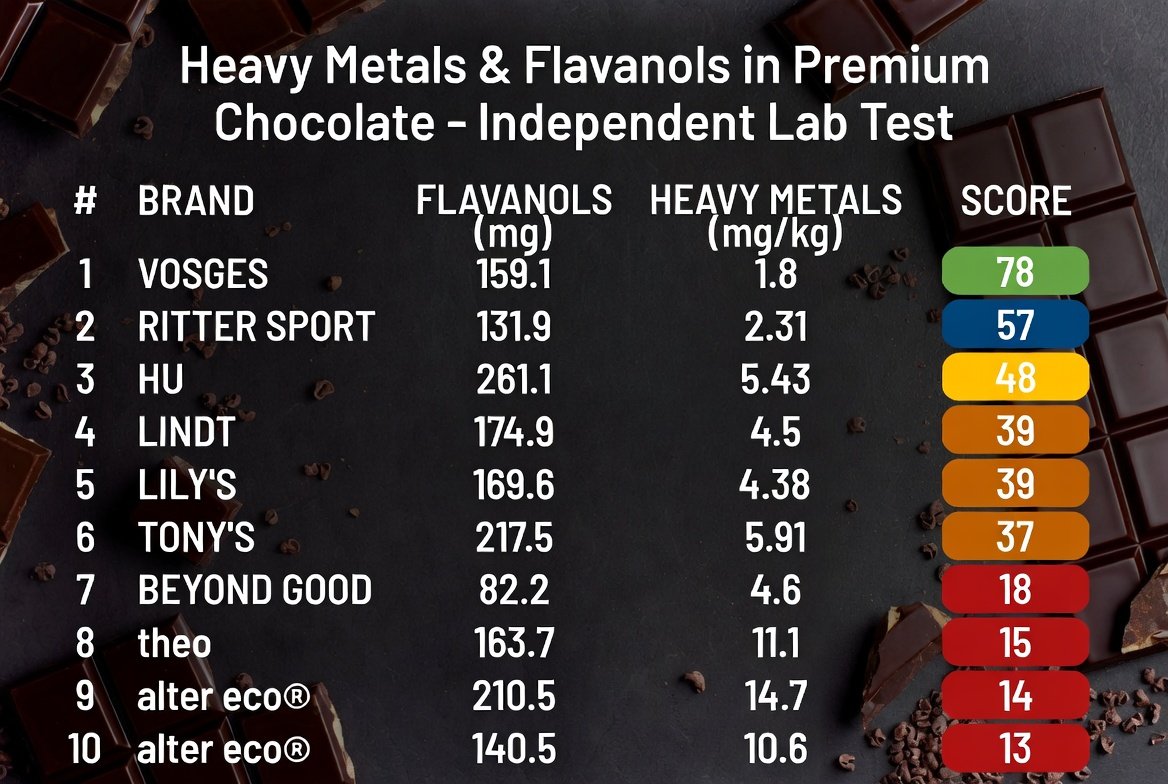
Brand Ranking Breakdown The chart on the right shows independent lab test results for 10 popular premium chocolates.
The top 6 brands deliver high flavanol benefits that clearly outweigh the low heavy metal risk — they’re worth enjoying.
The bottom 4, however, have either low flavanols or higher heavy metal levels, so the potential benefits do not clearly outweigh the risks. In my opinion, they’re not worth enjoying.
Bottom Line Always buy chocolate from trustworthy 3rd-party lab-tested sources to ensure you get the benefits with minimal risk.
Key Takeaway
Key Takeaway The products discussed above may contribute to cumulative exposure to chemicals linked to hormone disruption (including thyroid, endocrine, and sex hormone interference), neurological concerns, and possibly affecting fertility in some cases. Regulatory agencies consider them safe at typical levels in individual products, but long-term buildup from multiple sources remains difficult to fully regulate and assess — raising valid concerns. Where possible, it’s safest to avoid or replace them with lower-risk alternatives.
Quick Note Some of the products discussed, such as toothpaste, are part of daily routines and are important for hygiene and health. However, safer alternatives with fewer concerning ingredients exist for most products. After you finish reading the “What to Avoid” section and move to the “What to Integrate” section, you will find suggestions, examples, and lower-risk alternatives to replace the essential items.
⚠️ LEGAL & MEDICAL DISCLAIMER
⚠️ LEGAL & MEDICAL DISCLAIMER This is an educational analysis based on publicly available regulatory data and scientific literature (including sources from agencies like the FDA, EPA, CDC, and peer-reviewed studies). I am an analyst and educator, not a physician or medical professional. Regulatory agencies like the FDA generally consider the chemicals and substances discussed safe for use at approved or typical levels in individual contexts or applications. However, everyday exposure from multiple sources (such as various foods, water, consumer items, or environments) can result in cumulative exposure to certain chemicals (including potential endocrine disruptors like phthalates, parabens, triclosan, aluminum compounds, PFAS, or others). Some studies and regulatory reviews suggest this combined exposure may contribute to potential long-term health concerns, including infertility, though significant data gaps remain and more research is needed to fully assess real-world risks. These gaps arise because it is challenging to perfectly regulate and test every possible combination of exposures in complex real-world scenarios—not because of intentional harm, industrialized poisoning, or any form of deliberate misconduct. We explicitly reject conspiracy theories or claims of intentional mass harm; this is a matter of scientific and regulatory limitations that agencies are actively working to address through ongoing data collection and research. This content is provided strictly for informational and educational purposes only. It is not medical advice, nor is it intended to diagnose, treat, cure, or prevent any disease or condition. Nothing in this analysis should replace professional medical guidance. Always consult a qualified healthcare professional before making any health-related decisions, changing your routines, or modifying exposure to any substances. Your health choices remain your personal responsibility.

May we all be successful !
Just Dont forget !
Health ower Whealth Not
Whealth ower Health
Build The Character
The Rest Must
Folow !
All Social Media